IGNITE
Ignite Newsletter: 2026 October
October 5, 2026
By Tristyn, Café Momentum Ambassador Fellow
October is Youth Justice Action Month (YJAM), and this year’s theme is Building a Future Where Youth Thrive. That phrase means something different to me now than it would have when I was moving through the system myself, back when thriving felt like a word reserved for other people. I have lived the version of youth justice that focused on containment instead of possibility, but I have also lived the version that asked what I needed to actually grow. The difference between those two systems is the difference between a young person surviving and a young person thriving, and that gap is exactly what this month is about closing. YJAM asks us to sit with four different pieces of the same young person: their mind, their voice, their heart and their social circle.
That is really what education, youth leadership, healing and community come down to when you have lived them. My education got interrupted by the system before Café Momentum helped me finish what I started. My voice got dismissed by the system before I was given the chance to lead. My wellbeing got overlooked by the system before healing became part of my process instead of an afterthought. And I only made it through because a community refused to give up on me. Every sub-theme this month names something I needed and eventually received, and something too many young people still don’t get.
This matters to young people right now because the systems shaping their lives are still deciding, case by case and state by state, whether young people are worth investing in or worth managing. Youth Justice Action Month exists because that decision should never be left to chance. When we build a future where youth actually thrive, instead of one where they simply avoid the worst outcomes, we are finally asking the right question.
FEATURED NEWS AND REFLECTIONS
Youth Justice: Lessons From the Last 50 Years. This matters because I am proof that the newer approach built on understanding instead of punishment works. Since 2000, more than half of states have redefined what youth justice systems are actually for, moving away from punishment and toward a real understanding of adolescent development, and the trend line proves the shift was worth it: as fewer kids have been locked up, crime has gone down, not up. That is what happens when systems stop assuming the worst about young people and start asking what actually helps them grow. Looking back at fifty years of youth justice policy proves what people like me have been saying the whole time: punishment alone was never the answer. Now the evidence backs it up.
A New Path Forward: Ten Ways to Transform Youth Justice. This matters because I know what it feels like to be inside a system that had already decided it had the answers. Real transformation starts with a system willing to admit it does not. Having a free, practical framework that helps local systems evaluate themselves and figure out concrete next steps is huge, because good intentions do not change outcomes. Real assessment and real accountability do. When a system is willing to ask itself hard questions instead of assuming it already has the answers, that is the beginning of the kind of transformation young people actually need. Tools like this exist because someone finally admitted the old way was not working.
Education Program Gives Juvenile Justice Center Youth a Path Forward. This matters because education was the thing that gave me a future to actually walk toward, and programs like this prove what that access can do when it’s done right. Because young people move in and out of detention at completely different points in their education, flexibility is not a bonus, it is the whole foundation of whether the program works. Kane County’s education program earned statewide recognition specifically because it built something more than the bare minimum the law requires, and that distinction matters. My own homeschool programming through Café Momentum is the reason I had a diploma by sixteen instead of a gap I would have spent years trying to close. Every young person deserves a program built to meet them, not one that expects them to catch up on their own.
MY STORY
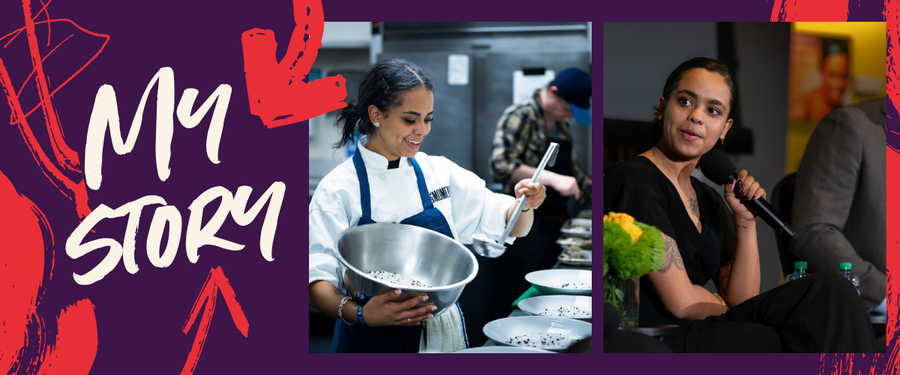
I spent time in Dallas County Juvenile Detention, cycling through a building that had already written my ending before I had lived enough of my own story to push back against it. Thriving wasn’t a word anyone used around me there, it wasn’t even really on the table. Café Momentum handed me a different premise entirely: that I was worth building toward instead of just managing. They put education, mentorship and real belief in my future ahead of whatever my file said about my past. Now I carry the title Ambassador Fellow, and I use it to hand other young people that same premise, that whatever assumption the system had about them doesn’t get the final word. I am working toward a career in education because I want to keep constructing the kind of room I had to be let into, one where growth is the default instead of the exception.
Too many young people are still moving through systems designed to hold them rather than launch them, and that’s backwards. They deserve to be read as capable, of leading, of healing, of becoming, not filed away until a sentence runs out. My hope is for a future where thriving isn’t the rare outcome for justice-involved youth but the baseline expectation. Give a young person real investment instead of low expectations, and watch them stop surviving the system and start outgrowing it entirely.
GET INVOLVED
Building a future where youth thrive takes more than a theme. It takes people willing to show up all month and beyond. This October, we’re asking you to be part of that. Follow along with each week’s focus and learn what each one actually requires from the adults and systems around young people. Advocate for education programs inside detention centers that go beyond the bare minimum, and for local youth justice systems willing to evaluate themselves honestly instead of assuming they already have it right. Support Café Momentum by donating, volunteering, or mentoring a young person who needs someone in their corner. Every action this month, big or small, is a vote for a system that helps young people thrive instead of one that just gets them through