IGNITE
Ignite Newsletter: 2026 March
March 6, 2026
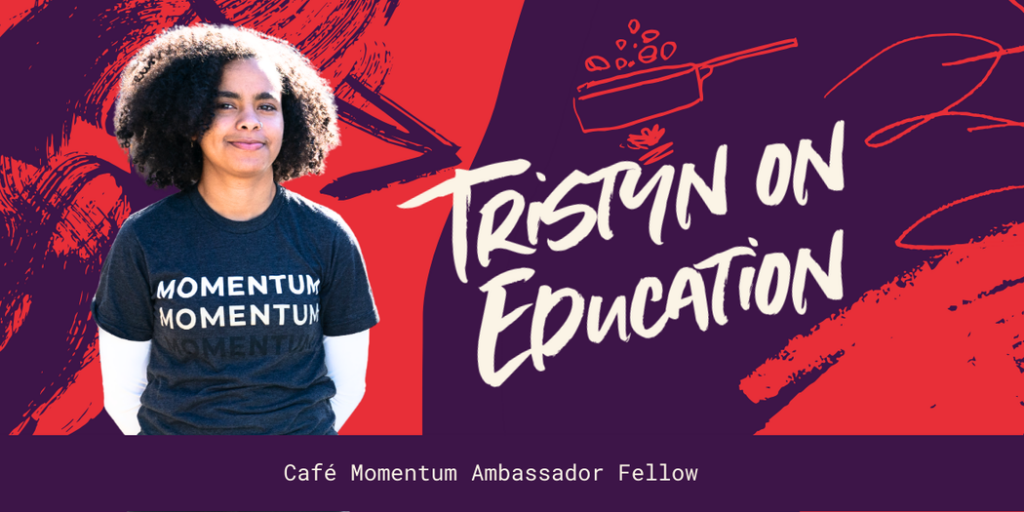
By Tristyn, Café Momentum Ambassador Fellow
We themed this month’s IGNITE around Education Access. We selected articles that I hope will give you the resources to examine who actually has the opportunity to learn and move forward (spoiler: it’s not typically our youth). In working alongside justice-involved youth and reflecting on my own educational experiences, I have learned that access to education is about much more than enrollment. It is about whether students feel safe asking for help, supported when they fall behind, and physically and emotionally nourished enough to concentrate.
I will always remember the frustration I felt watching my bright and capable younger self struggle in school after my involvement with the justice system. Not because I lacked intelligence, but because the systems around me were not designed to respond to the realities I was facing, including court involvement, housing instability and food insecurity.
Additionally, in recognition of National Nutrition Month, I have also been reflecting on how something as basic as consistent meals shapes a young person’s ability to focus, manage emotions, and engage in school. Hunger can show up as irritability, withdrawal, or behavior that is labeled as defiance. What may look like a discipline problem is often an unmet need.
This matters to young people right now because education can be one of the strongest protective factors against deeper system involvement. For justice-involved youth especially, meaningful access to school can create stability, opportunity, and hope. When we connect nutrition, emotional well-being and equitable academic support, we move closer to creating environments where young people can truly succeed and dream rather than simply survive.
FEATURED NEWS AND REFLECTIONS
NYC students in juvenile detention often denied the education support they need, report finds.
In this article, the author reports that many students in juvenile detention are denied consistent schooling and access to special-education services while they are incarcerated. Reading this reminded me of how uncertain education can feel for young people navigating the justice system. At Café Momentum, I experienced what it looks like when someone takes your education seriously. Their team worked with me 1:1 to keep me on track and moving toward graduation.
Northwestern study yields insights on improving outcomes for incarcerated youth.
In this article, researchers studied how longer periods of incarceration make it harder for youth to graduate high school or build stable careers later in life. This resonated with me because when I was released from detention, school felt like an impossible feat. Through Café Momentum’s education program, I caught up and graduated before I turned 18. My hope is that this research helps people understand just how difficult it can be to complete school after involvement in the justice system, without a community willing to stand beside you.
Advocacy to Disrupt the School-to-Prison Pipeline.
This article focuses on the school-to-prison pipeline and how suspensions and expulsions can increase the likelihood that young people become involved with the justice system. When students are pushed out of school, they often lose the structure and support that help keep them moving forward. At Café Momentum, I saw how mentorship and consistent encouragement can help young people reconnect with school and begin to see new possibilities for themselves.
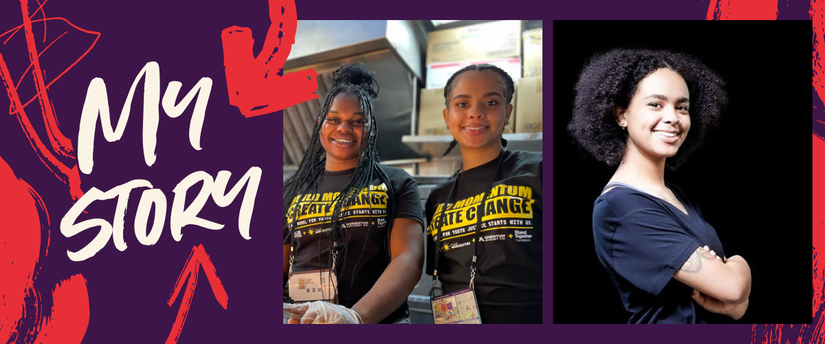
MY STORY
During my sophomore year of high school, I spent time in Dallas County’s juvenile education system while completing probation. I truly believed I would never catch up because the curriculum felt so far behind and disconnected from what I needed. Café Momentum’s homeschool program changed that for me. For the first time, I felt like I had a real chance not just to catch up, but to excel. With strong support from my teacher and tutors, I graduated at 16 as a young mother and gained the confidence to pursue college.
Today, I’m paying that encouragement forward by mentoring younger peers at Café Momentum and urging them to finish school and pursue higher education. I’m also working toward my degree in Child Development and Education, so I can continue supporting the next generation. This matters because I once gave up on myself academically after feeling discouraged and written off. The support I received at Café Momentum helped me rebuild my confidence and believe in a better future for myself and my family. Young people deserve to be treated as students with potential, not problems defined by their mistakes or lack of resources.
I want others to understand how important it is to address both behavioral and academic challenges with real support and resources. Every student deserves a genuine opportunity to succeed, and it’s up to our community to help make that possible.
GET INVOLVED
This month, I’m asking our community to take an honest look at how systems meant to support young people are often pushing them further behind through incarceration, harsh school discipline and lack of educational support. We’ve seen the data, and many of us have lived it. Now is the time to act. Push for safer detention conditions, demand meaningful educational resources, support programs that truly help youth and challenge school policies that punish instead of support. Our young people need opportunity, accountability with care and a community ready to stand with them.