IGNITE
Ignite Newsletter: 2026 June
June 3, 2026
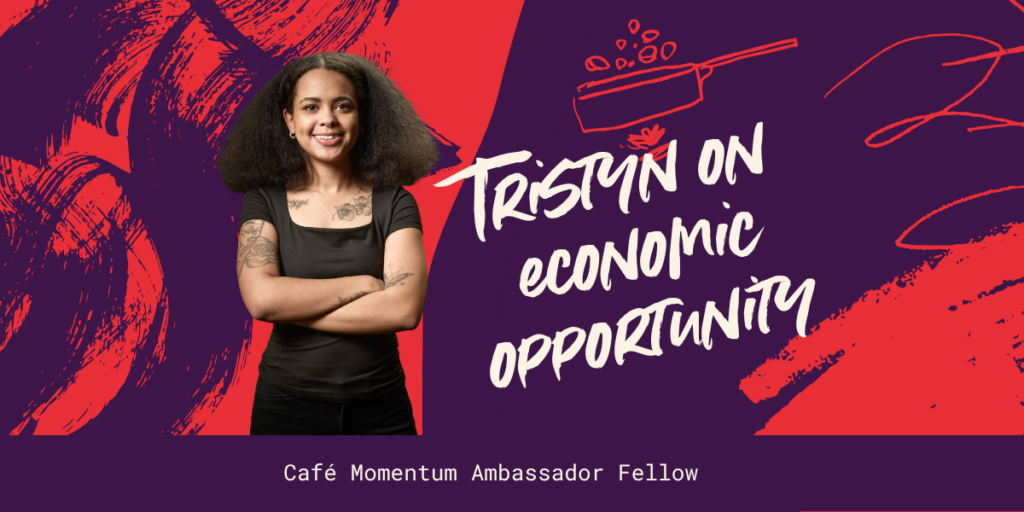
By Tristyn, Café Momentum Ambassador Fellow
There is a conversation that does not get nearly enough airtime, and this month we are making space for it. Economic opportunity. Not as a talking point or a policy footnote but as something deeply personal. I have felt both its presence and its absence, and both have changed the entire shape of my life.
The neighborhoods I grew up in were full of potential that nobody came to look for. The people around me had dreams that were just as real and just as loud as anyone else’s. What we did not have was a clear path between where we were standing and where we wanted to go. And when that path does not exist, young people aren’t able to wait patiently. They improvise to survive. And sometimes, surviving entails making choices that land you inside a system that was never designed to help you get out.
What nobody tells you about reintegration is how much of it happens before you even open your mouth. A record speaks first. A background check answers questions no one asked you directly. By the time a young person sits across from an opportunity, the system has often already decided for them. That is not a level playing field. That is a setup.
What I know from living this is that when a young person is given real access, a job that pays a living wage, a mentor who vouches for them, a program that teaches skills that the market actually needs, something shifts. It becomes possible to believe that the future is a place you are allowed to exist in. And when we talk about economic access we are really talking about belonging. When a young person finally feels like they belong somewhere worth belonging to, that changes the entire trajectory of who they become.
FEATURED NEWS AND REFLECTIONS
Unlocking America’s hidden workforce. This article says out loud what too many people in power have been unwilling to acknowledge. Nearly 500,000 people reenter society every year, and a 30% unemployment rate is not a coincidence. It is what happens when a system releases people without the tools to succeed and then acts surprised when they struggle. What this article makes clear is that the barrier is not the person. It is the policy, the lack of training, the employer who will not look past a record. Fair chance hiring and real workforce investment are not acts of charity. They are what it actually looks like to believe in second chances.
Workforce Development Programs That Work for Youth With Justice-System Experience. What this piece gets right is something I wish more people understood before making decisions about young people like me. The programs that actually work are not the ones that just hand you a resume template and send you on your way. They are the ones built around staff who understand where you come from, who meet you where you are and who keep showing up even when things get hard, like Café Momentum. I have experienced the difference between being processed and being seen, and it is not a small one. What the research here confirms is that wraparound support, real employer connections and paid opportunities are not extras. They are the whole point. A young person cannot focus on their future when their basic needs are still unsettled, and any program serious about workforce development has to be willing to start there.
After incarceration, the road to employment can seem impossible. Here’s how Coloradans can beat the odds. Reading about Tabitha felt like reading a version of a story I already knew. Wanting to do better, being ready to do better and still watching doors close the moment your record comes up. What this piece makes clear is that motivation alone has never been the missing ingredient. Access is. Connection is. Having someone in your corner who keeps showing up even after the setbacks is. Justice-involved youth are not looking for anyone to hand them something. They are looking for a real chance to earn it, and that starts with systems and employers willing to take one.
MY STORY
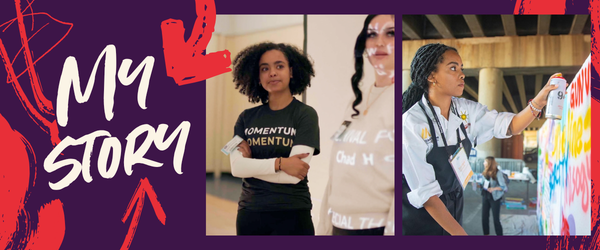
I spent time moving through a system that processed me without ever asking what I needed to really succeed once I left. For a long time, I believed that economic stability was something meant for other people, people whose paths had not looked like mine.
Café Momentum changed that. It was the first time I felt like my potential had somewhere real to land, somewhere that connected my growth to actual skills, real opportunities and people who believed my future was worth investing in.
Today I am committed to speaking up in rooms where justice-involved youth are talked about but rarely heard from. I am working toward shifting the narrative around what young people like me are capable of when the right doors are opened to us.
This matters because a young person cannot fully reintegrate into a community that will not hire them, house them, or see them as a contributor. Young people deserve access to the economic tools that make everything else possible.
I believe that when justice-involved youth are given real opportunities to earn, build and belong, they do not just change their own circumstances. They strengthen the communities that once counted them out.
GET INVOLVED
Economic opportunity for justice-involved youth is not a distant policy issue. It is happening right now, in hiring decisions, in courtrooms, in classrooms and in the communities where young people are trying to rebuild their lives. The question is not whether change is needed. The question is whether you are willing to be part of making it happen.
Start by getting informed and then get loud about it. Understand what economic exclusion actually costs justice-involved youth and bring that knowledge into your conversations, your workplaces and your communities. Push your local representatives to prioritize fair chance hiring, workforce development funding and policies that stop treating a record as a life sentence. Support Café Momentum by giving your time, your resources, or your platform to young people who are already doing the work of rebuilding. The system will not change if we wait for it to. It will change when enough people decide that the cost of staying silent is too high.